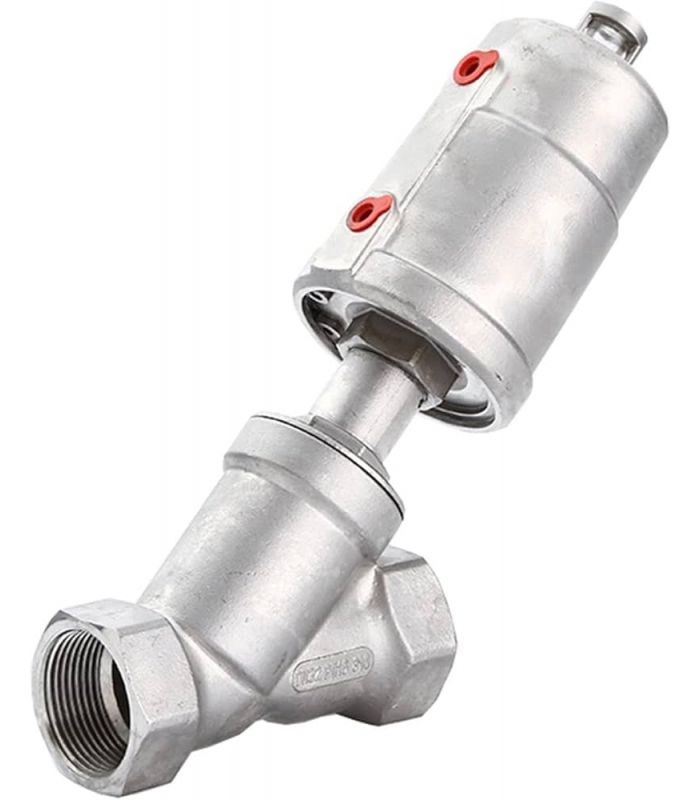
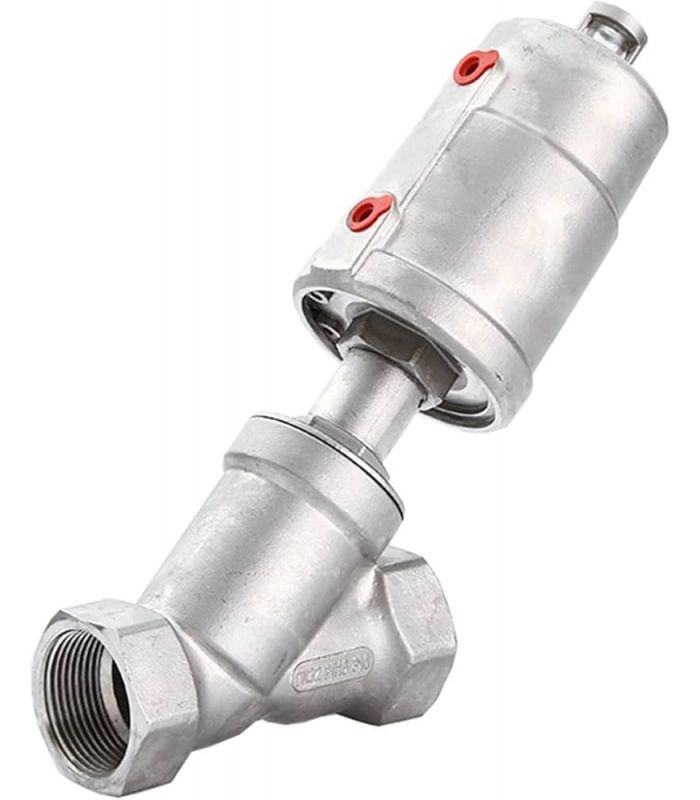
A pneumatic angle seat valve is a robust, self-cleaning industrial valve using compressed air to control fluid/gas flow (liquids, steam, gases) via a piston, featuring a 45° angled body for high flow rates, low pressure drop, and long life, ideal for demanding automation needing fast, reliable on/off or modulating control in harsh environments.
Key Features & Function
- Actuation: Pneumatically operated by air pressure (or other fluids) acting on a piston, with options for Normally Closed (NC), Normally Open (NO), or Double-Acting (DA).
- Angled Body: The 45-degree seat design allows for a clear, unobstructed flow path when fully open, minimizing pressure loss and enabling self-cleaning action.
- High Performance: Offers higher flow capacity and faster switching cycles than many other valve types.
- Durability: Features a self-aligning stem and dual packing for extended cycle life, resisting wear and corrosion.
- Versatility: Suitable for steam, liquids (viscous included), gases, and vacuum applications, even in potentially explosive (Ex) zones.
How it Works (Simplified)
- Pilot Signal: A separate pneumatic pilot valve sends air pressure (or fluid) to the actuator.
- Piston Movement: The air pressure pushes a piston, which moves a stem up or down.
- Flow Control: This movement lifts (opens) or pushes down (closes) a plug or disc against the angled seat, controlling fluid flow.
- Spring Return (for NC/NO): A spring typically returns the valve to its default position when air pressure is removed.
Common Uses
- Isolation and control in pipelines.
- Automation in processing industries (food, chemical, pharma).
- Steam and high-temperature systems.
- Applications requiring frequent, fast cycling.