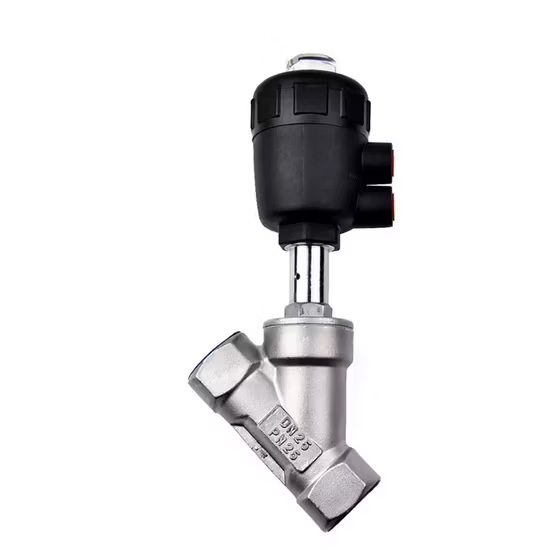
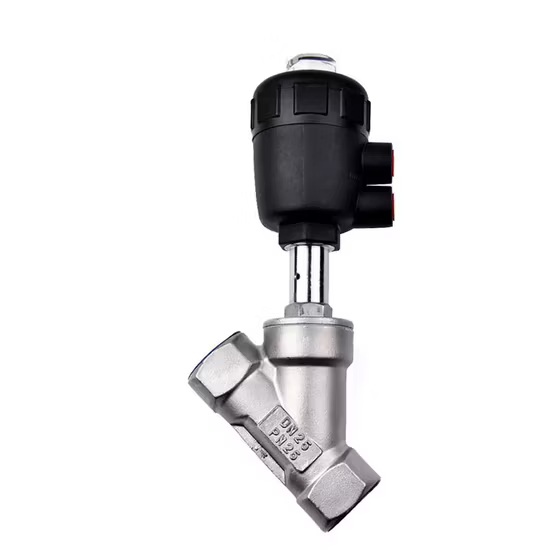
A manual angle seat valve is a fluid control device with an angled body (often 45°) and a handwheel for direct human operation, allowing precise start/stop/regulation of liquids, gases, or steam by turning the wheel to raise or lower a piston, creating a smooth, low-pressure-drop path for flow, ideal for industrial settings needing simple, reliable control.
Key Components & Function:
- Angle Body: The valve body has an internal angle (e.g., 45° or 90°) for a direct, streamlined flow path, reducing turbulence and pressure loss.
- Handwheel: A multi-turn wheel operated by hand to open or close the valve, providing fine flow adjustment.
- Piston/Plug: A component that moves up and down with the handwheel's rotation, sealing against an angled seat to control flow.
- Seat: The surface inside the valve where the piston seals to stop flow, designed for durability and a tight seal.
How it Works (Manual Operation):
- Turn Handwheel: Rotating the handwheel (often 360° or more) mechanically moves the piston.
- Piston Movement: The piston lifts off or presses against the seat.
- Flow Control: Lifting the piston allows fluid to flow through the angled path; lowering it restricts or stops the flow, offering precise control.
Benefits:
- Streamlined Flow: Angled design minimizes pressure drop and turbulence.
- Manual Control: Direct human intervention for simple, reliable operation.
- Versatile: Handles liquids, gases, and steam in various industrial applications.
Applications:
Used widely in chemical processing, food & beverage, packaging, and other industries for tasks like filling, dosing, and general fluid management.