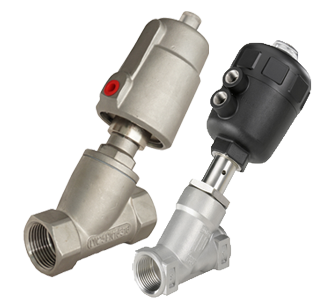
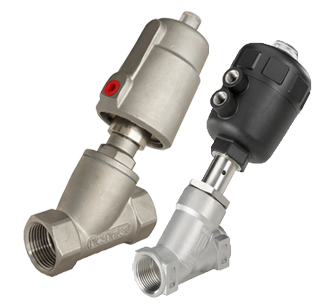
An electrically actuated angle seat valve is a robust, motor-operated device used for precise and automated control of fluid flow in industrial processes. Unlike the common pneumatic versions, it uses an electric motor to move the valve's piston, enabling fine positional control and integration into complex control systems.
Key Features and Description
- Actuation Mechanism: An electric actuator containing a motor and a gearbox converts electrical energy into mechanical movement to open or close the valve. This allows for fine-tuned flow regulation beyond simple on/off operation (proportional control).
- Angled Body Design: The valve body features a seat positioned at a 45° (or similar) angle to the flow path, creating a larger flow area and minimizing pressure loss and turbulence. This design facilitates high flow rates and makes the valve highly resistant to clogging, even with viscous or contaminated media.
- Precision and Feedback: Integrated sensors (such as position sensors or limit switches) provide continuous feedback on the valve's exact location to a control system. This ensures high accuracy, repeatability, and allows for real-time adjustments and diagnostics.
- Durability and Media Compatibility: These valves are designed for demanding applications, capable of handling high temperatures (up to 200°C/392°F with PTFE seals) and high pressures. They are often constructed from durable materials like stainless steel and are suitable for controlling various media, including liquids, gases, steam, and aggressive chemicals.
- Operation: Electric angle seat valves are ideal for situations where electricity is readily available but compressed air is impractical. They offer excellent control characteristics and can be operated remotely as part of an automated process control system.
Typical Applications
- Food and Beverage: Used for filling operations and steam sterilization processes due to their fast operation and hygienic design.
- Chemical Processing: Their robust design ensures precise control, even with corrosive or aggressive media.
- Water and Wastewater Treatment: The angled seat design minimizes clogging, making them well-suited for sludge and slurry control.
- Pharmaceutical Manufacturing: Ensure tight shut-off and reliable performance in critical clean steam systems and fluid control applications.